Selling Land to Developers
Posted on by Mark Hempshell5 min read
Why Would Developers Be Interested in Your Land?
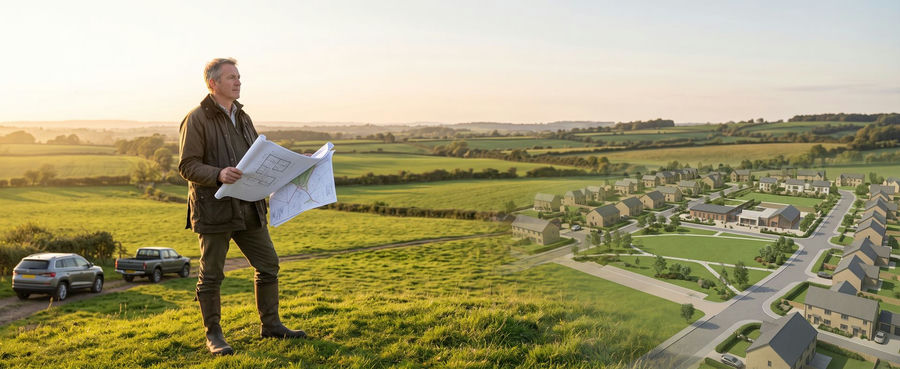
That new housing estate, business park or drive through coffee shop you passed earlier was likely the work of a property developer. But way beyond a desire to build shiny new developments, property developers build value. They turn land with one use into land with another use and take a margin from the value they add.
It is this, more than anything else, that guides whether you could sell your land to a developer. If your land has potential for a use other than its current use then a developer could be interested in it. And, if that is the case, it is the reason why a direct approach to a developer could be one of your options.
Not all land has potential for other uses of course. If yours doesn’t then not to worry; there are other routes available to you.
The Pros and Cons of Selling to Developers
Selling your land direct to a developer, in an off market sale, offers potential for finding a buyer quickly. You don’t need to put your land on the market, wait for buyers to find out about it, and wait for any offers to surface. If indeed there are any.
Selling land direct to a developer offers confidentiality. There is no open market advertising nor any publicly advertised asking price to intrigue the curious.
There could be scope to achieve a better return in some cases. There are two sides to this particular coin however: A developer may offer more to secure an agreement and lock out their rivals. Yet, when land is not exposed to the open market it can be more difficult to ascertain its true value.
On the downside, it may not always be easy to identify the best developer for your land. In extremis, there might not actually be a developer who wants to buy it.
So, is a direct sale to a developer better than an open market sale or selling at auction?
The only truthful answer is that it suits some land, in some circumstances and for some sellers. But by no means all. An expert appraisal can help you decide whether it could be the right route for you.
We offer some further insight on the current UK land market and the different options available to you on our land hub here.
Planning Status and How It Changes Everything
Every plot of land, whatever and wherever it might be, has a planning status. It is important to understand that this changes everything about saleability, who might buy your land and how.
Land with planning consent: This land might interest developers looking for a shovel ready project that particular consent allows.
Land which benefits from an allocation under the current Local Plan, or from policy support under the National Planning Policy Framework: In simple terms this means the land may not currently have consent for a project but may be able to secure it. It is likely to appeal to developers who want to pursue a project that the particular Local Plan or NPPF supports.
Land with neither planning consent nor Local Plan or NPPF support. One example is Green Belt land. This may interest developers buying for future potential, eg. if local or national policies change in future.
Additionally there is land with so-called adverse planning history. Such as a record of planning refusals, onerous planning conditions or failed appeals. This land may still interest developers who are willing to work to overcome these issues.
How Selling to a Developer Works
Firstly, we would invite you to request an assessment via LandSale. This does not commit you to anything.
We use the latest UK market data to help assess the potential of your land. Here’s an example of the data we draw on. (We have comprehensive data for every county in the country, not just Kent.)
Our assessment will explore all the options for selling your land including open market sale, secure auction, as well as direct sale to a developer.
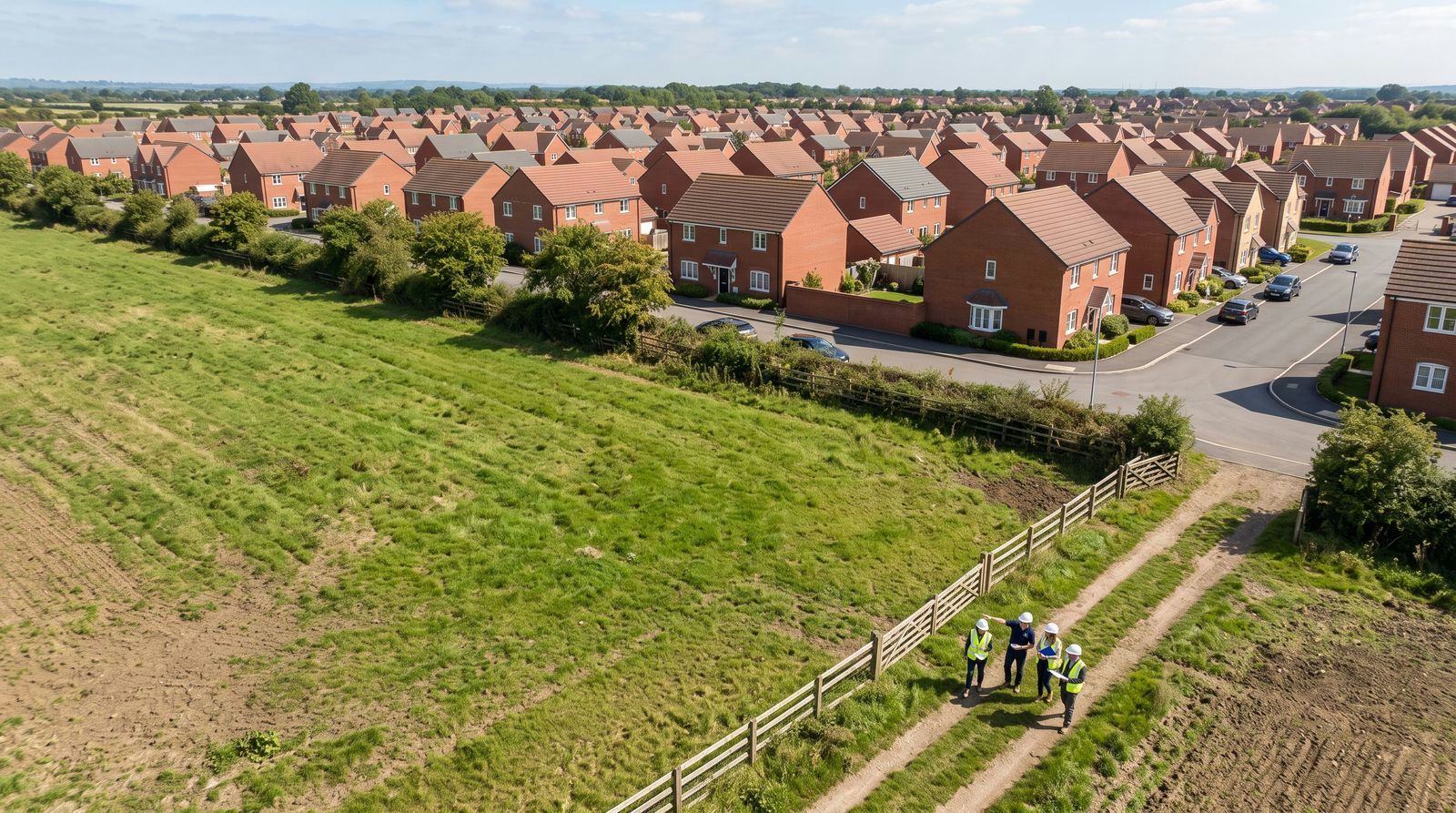
If the developer route is appropriate our assessment will aim to identify developers who may be interested in your land.
At this point, if you haven’t already, we would strongly advise you to take your own independent tax and financial advice regarding a potential sale of your land.
If, and only if, you decide to proceed we aim to arrange an introduction to a developer.
The developer undertakes their own assessment of your land and, if it meets their current requirements, makes you an offer.
You decide whether to accept or reject. It is entirely your choice.
Thinking of selling land?
Tell us about your property and we recommend the strongest route. Whether that’s open market, auction or off-market to developers.
Conditional Sale and Option Agreements, What Are They?
If you receive an offer from a developer it may be on an outright sale basis. But it is more likely it will be on a conditional sale basis or involve an option agreement.
With a conditional sale agreement the sale only becomes final once certain conditions are met. Typically this might be granting of planning permission for a developer’s proposed scheme. If the conditions are met the sale proceeds at the agreed price. If the conditions are not met there is no sale.
With an option agreement the developer pays you a fee for an option to buy your land. But they are not obliged to buy it. There will usually be an agreed option period; typically between one and ten years. This is usually so that the developer can obtain planning permission for their proposed scheme. If they exercise their option, the sale goes ahead. If they do not, the agreement ends and you’re able to keep the option fee.
With these kinds of agreements the selling price may or may not be fixed at the outset. It may be calculated according to an agreed formula. For example, the uplifted value of the land with planning consent less some of the costs of securing that permission.
Conditional sale
- Who pays for planning
- Usually the developer, once the contract is signed
- When the sale completes
- When the conditions are met, usually planning permission
- If it falls through, you keep
- Your land. No sale, no price paid
Option agreement
- Who pays for planning
- The developer, during the option period
- When the sale completes
- If and when the developer exercises the option
- If it falls through, you keep
- Your land, plus the option fee already paid
Promotion agreement
- Who pays for planning
- The promoter, at its own cost
- When the sale completes
- After planning is granted and a buyer is found on the market
- If it falls through, you keep
- Your land. The promoter carries its own costs
The Role of Land Promoters
Something you might encounter if you are considering selling your land to a developer is a promotion agreement.
Land promoters are not developers themselves. Rather, they undertake to obtain planning permission for your land, covering the costs themselves. Then aim to sell it to a developer on your behalf. If they succeed, their costs are deducted from the proceeds and the remainder is split between seller and promoter on an agreed basis.
A promotion agreement does involve giving up control of the process to some extent; neither is there any guarantee of a sale. However potentially it could maximise the return, since the promoter has a vested interest in maximising your land’s value and achieving the best possible sale price.

Property journalist
Mark Hempshell is a freelance writer and journalist who specialises in covering the UK property market. His particular areas of interest include regeneration, development, investment and residential agency.
So would a direct sale to a developer be the right option for you?
Would a developer even be interested in your land? Ultimately the decision is yours. But a professional assessment via LandSale based on current market data can help you explore your options and aid your decision.